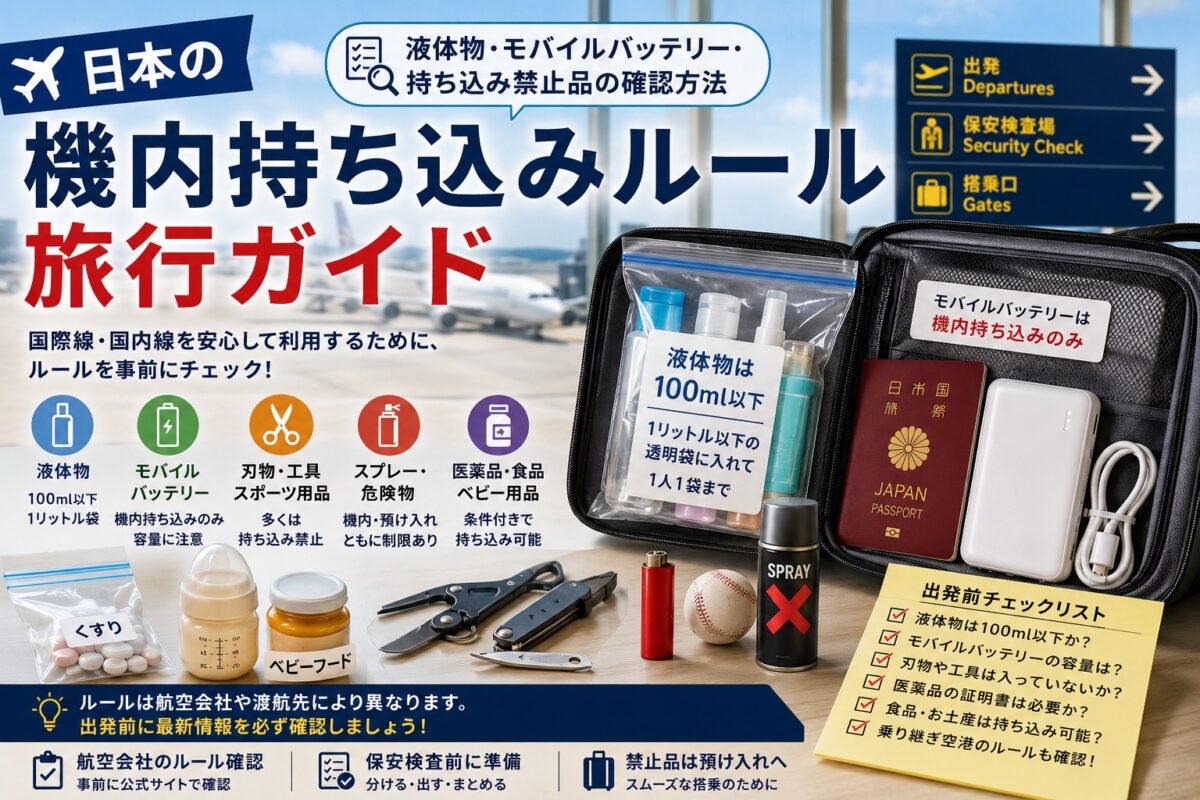
Carry-on rules can be confusing because cabin baggage is not checked by only one standard. A power bank, liquid medicine, sunscreen, small scissors, snacks, or prescription drugs may be treated differently depending on airport security, airline policy, and the destination country’s customs rules.
This carry-on rules guide explains what to pack in your cabin bag, what to check before flying, and which items may need documents, airline approval, or checked baggage instead.
Quick answer: keep essential medicine, valuables, documents, electronics, and power banks in your carry-on bag. Pack liquids in small containers, check battery capacity, keep prescription medicine labeled, and confirm restricted items before international travel.
What this carry-on rules guide helps you check before flying
Many travelers only check whether their bag size is allowed on the plane. But carry-on rules are broader than cabin bag dimensions. Airport security may stop liquids, gels, aerosols, sharp objects, tools, batteries, sprays, and other safety-sensitive items. Airlines may apply separate rules for cabin baggage size, weight, battery capacity, and special items. Your arrival country may also restrict food, medicine, plants, animal products, or controlled ingredients.
That is why an item can be allowed by the airline but still questioned at security or customs. Before packing, it helps to divide your items into three groups: usually fine, allowed with conditions, and restricted or prohibited.
| Group | Common examples | What to check |
|---|---|---|
| Usually fine | Passport, wallet, phone, clothes, laptop, camera, charging cable | Airline cabin bag size, weight, and item count |
| Allowed with conditions | Liquids, gels, sprays, power banks, spare lithium batteries, prescription medicine, baby food, duty-free liquids | Container size, clear bag rules, Wh rating, documents, and airline approval if needed |
| Restricted or prohibited | Knives, larger scissors, box cutters, flammable items, explosives, certain gases, some tools | Airport security rules and dangerous goods restrictions |
Liquids, gels, aerosols, creams and pastes
Liquids are one of the most common reasons items are removed at airport security. The rule is not only about water or drinks. Shampoo, conditioner, body wash, toothpaste, sunscreen, lotion, perfume, makeup, hair gel, shaving cream, hand sanitizer, and contact lens solution may all count as liquids, gels, creams, pastes, or aerosols.
For many international routes, carry-on liquids must be packed in small containers, commonly 100 ml or less, and placed in a clear resealable bag. The important detail is the container size, not how much product is left inside. A 200 ml bottle that is half empty may still be rejected because the container itself is larger than the limit.
Travel note: if a liquid item is important, use a travel-size container with the capacity clearly marked. Do not rely on “there is only a little left.”
Food can also count as a liquid or gel
Some foods may be treated like liquids or gels at airport security. Jam, honey, yogurt, soup, sauce, paste, soft cheese, peanut butter, chili paste, and kimchi may be restricted depending on texture, container size, and route. Dry snacks and solid packaged foods are usually easier to carry, but destination-country customs rules may still apply.
Power banks and lithium batteries
Power banks need extra attention because they contain lithium batteries. In many cases, power banks and spare lithium batteries should be carried in cabin baggage, not checked luggage. This is because a battery incident is easier to notice and manage in the cabin than in the cargo hold.
Before flying, check the Wh rating printed on your power bank or battery. Wh means watt-hours, and airlines use this number to decide whether a battery is allowed, limited, or requires approval. Smaller phone power banks are usually easier to carry, while laptop power banks, drone batteries, camera batteries, and high-capacity charging packs need closer checking.
Power bank packing checklist
- Carry power banks in your cabin bag.
- Do not pack spare lithium batteries loose in checked luggage.
- Check the Wh rating before departure.
- Protect battery terminals from metal objects.
- Use original packaging, a pouch, or a battery case when possible.
- Do not carry swollen, damaged, or unmarked batteries.
- Check your airline’s latest battery policy before flying.
Power bank update: power bank rules can change by airline and route. Some airlines limit the number of power banks per passenger or restrict using and charging them during flight. Always check your airline’s current battery page before departure.
Medicines and medical items
Medicines are usually allowed in carry-on luggage, and essential medicine should normally stay with you rather than in checked baggage. Checked bags can be delayed, lost, damaged, or unavailable during a long connection.
Prescription medicine should be kept in original packaging when possible. A pharmacy label, prescription copy, doctor’s letter, or English explanation can help if airport security or customs asks what the medicine is for. This is especially useful for controlled substances, sleeping pills, strong pain medicine, stimulant medication, injection devices, insulin, syringes, or a long-term supply.
If you are preparing medicine for an international trip, see our travel medicine guide for a more detailed packing checklist.
Liquid medicine, injections and cooling packs
Liquid medicine may be treated differently from ordinary toiletries, but you should not assume it will pass without questions. Keep it labeled, separate it from cosmetics, and carry supporting documents when possible.
Injection pens, syringes, insulin, medical gels, cooling packs, and other medical items should be packed together with the related medicine. If a medicine must stay cold, check the storage time of your cooling pack and your full travel schedule before departure.
Practical packing tip: keep daily medicine, emergency medicine, inhalers, insulin, allergy medicine, and time-sensitive medicine in your personal item or carry-on bag.
Electronics, cameras and smart luggage
Phones, laptops, tablets, cameras, e-readers, headphones, chargers, and travel adapters are usually allowed in carry-on luggage. The main issue is not usually the device itself, but the battery inside it and the way spare batteries are packed.
Keep larger electronics easy to remove at security. Some airports ask travelers to place laptops or tablets in a separate tray, while others use newer screening equipment and may not require this. Since procedures vary, pack electronics where you can reach them quickly.
Cameras, drones, and smart luggage need extra planning. Drone batteries and camera batteries may have higher capacities than normal phone accessories. Smart luggage may need a removable lithium battery, especially if the bag must be checked at the gate.
Food in carry-on luggage
Food is confusing because there are two separate questions. First, can the food pass airport security? Second, can the food enter the destination country?
Dry snacks, crackers, cookies, sealed candy, instant noodles, tea bags, and solid packaged foods are usually easier to carry. Wet, creamy, spreadable, or liquid foods may be treated as liquids or gels. Meat, fruit, seeds, dairy products, fresh food, plant materials, and animal-derived products may also be restricted by customs or quarantine rules after arrival.
If you are carrying food as a gift, keep it sealed and keep the ingredient label visible. Unmarked homemade food is harder to explain and may be more likely to cause problems at customs.
Sharp items, tools and sports equipment
Sharp items are one of the clearest carry-on risk categories. Knives, box cutters, razor blades, utility knives, and larger scissors are usually not allowed in cabin baggage. Small grooming items may be allowed in some airports, but rules vary by country and airport.
Tools can also be restricted. Screwdrivers, pliers, wrenches, multi-tools, metal files, craft tools, and sharp souvenirs may be questioned depending on size, shape, and local screening rules. Sports equipment such as bats, clubs, trekking poles, tent pegs, and similar items may also need checked baggage.
Aerosols, sprays and pressurized containers
Aerosols and sprays may be restricted because they combine liquid rules, pressure rules, and sometimes flammability rules. Deodorant spray, hairspray, shaving foam, insect repellent spray, and cosmetic sprays may be allowed only within limits.
Industrial sprays, spray paint, fuel canisters, lighter fluid, and flammable gases are usually not suitable for carry-on baggage. If a container can spray under pressure, burn, leak, or explode, check the rule before packing it.
Items usually prohibited in carry-on luggage
- Firearms and ammunition
- Explosives and fireworks
- Large knives and sharp blades
- Box cutters and utility knives
- Larger scissors
- Baseball bats, clubs, and similar blunt objects
- Flammable fuel and lighter fluid
- Strong chemicals or toxic substances
- Large tools that could be used as weapons
- Damaged lithium batteries
- Certain compressed gases
If you are unsure about an item, check the departure airport, airline, and destination-country rules before packing it. When in doubt, pack the item in checked luggage if allowed, or leave it at home.
Carry-on vs checked luggage: what should go where?
| Better in carry-on luggage | Better in checked luggage |
|---|---|
| Passport and travel documents | Full-size toiletries |
| Wallet, cards, and valuables | Large liquid bottles |
| Essential medicines | Sharp tools or larger scissors |
| Power banks and spare lithium batteries | Sports equipment |
| Laptops, tablets, and cameras | Large souvenirs that may not pass cabin screening |
| One change of clothes for long trips | Items not needed during the flight |
Five-minute carry-on check before leaving for the airport
- Check your airline’s cabin baggage rules. Confirm bag size, weight, number of items, and special approvals.
- Review airport security rules. Check liquids, sharp items, tools, sprays, batteries, and restricted goods.
- Separate liquids and gels. Use small containers and keep the clear bag easy to reach.
- Check battery capacity. Look for the Wh rating on power banks and spare lithium batteries.
- Protect spare batteries. Keep terminals away from keys, coins, cables, and other metal objects.
- Keep medicine labeled. Carry prescriptions, pharmacy labels, or doctor’s notes when needed.
- Check destination rules. Food, medicine, plants, seeds, animal products, and controlled ingredients may be restricted after arrival.
- Remove borderline items. If an item has a blade, sprays under pressure, burns, leaks, or looks like a weapon, check it carefully.
FAQ
Can I bring medicine in my carry-on bag?
Yes, essential medicine is usually best kept in your carry-on bag. Keep prescription medicine labeled and carry supporting documents when needed, especially for international travel.
Can I bring a power bank on a plane?
Usually yes, but power banks are generally carried in cabin baggage, not checked luggage. Capacity limits and airline approval rules may apply depending on the Wh rating.
Can I bring full-size shampoo in my carry-on?
Usually no. Full-size shampoo bottles often exceed carry-on liquid limits. Use travel-size containers or pack full-size toiletries in checked luggage.
Can I bring food through airport security?
Many solid foods are allowed, but sauces, soups, spreads, gels, pastes, and creamy foods may be treated as liquids. Destination-country customs rules may also restrict food after arrival.
Are scissors allowed in carry-on luggage?
Small scissors may be allowed in some airports, but rules vary. Larger scissors, blades, box cutters, and sharp tools are usually prohibited in carry-on baggage.
Should I pack power banks in checked luggage?
No. Power banks and spare lithium batteries are usually required to be carried in cabin baggage. Do not pack them loose in checked luggage.
Do duty-free liquids count as carry-on liquids?
Duty-free liquids may be allowed under special conditions if sealed in an official security bag with proof of purchase. However, connecting flights can create additional security checks, so confirm the rules before buying.
Final thoughts
Carry-on rules are easier to manage when you think in categories: liquids, batteries, medicines, sharp items, food, electronics, and restricted goods. The safest approach is to keep essential items with you, pack restricted items carefully, and check airline, airport, and destination-country rules before flying.
A few minutes of checking before departure can prevent confiscated items, security delays, and unnecessary stress at the airport. If you are also preparing medicine for your trip, review our travel medicine guide before packing your bag.