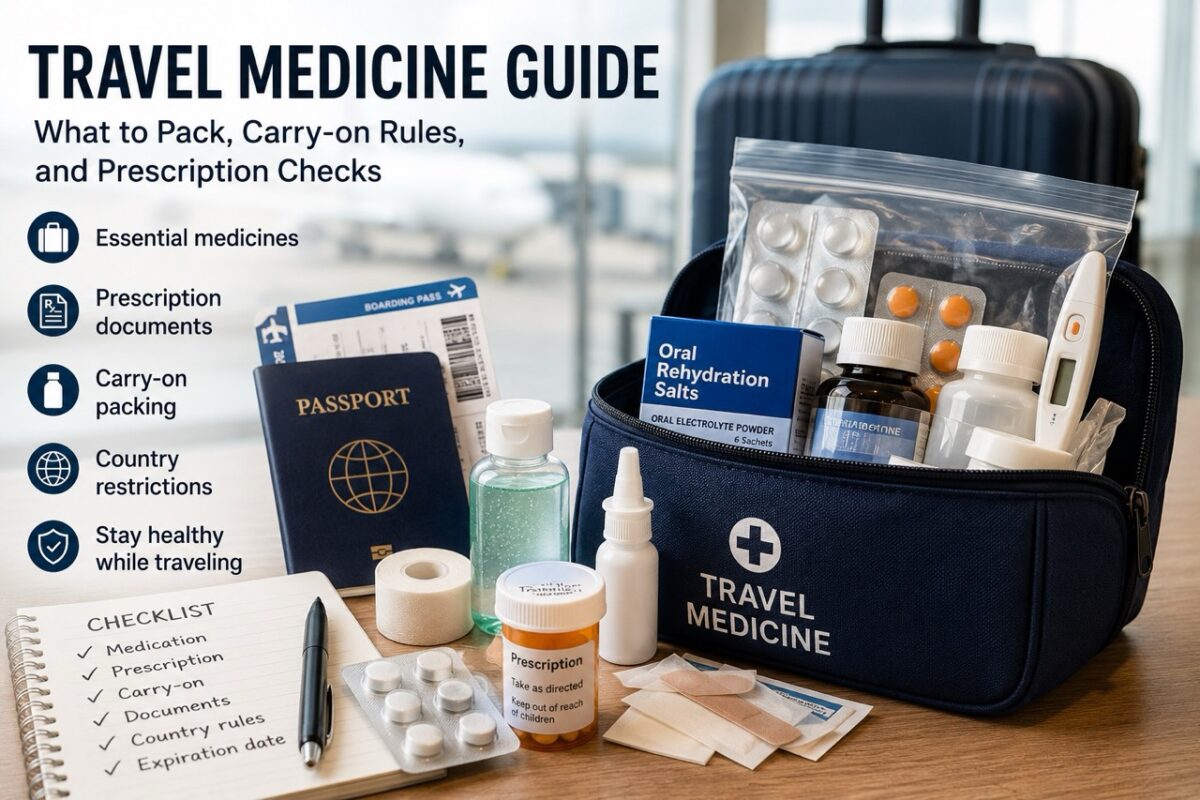
Travel medicine can be confusing because packing medicine is not just a health issue. It can also become an airport security, airline, and border-control issue. Pain relievers, stomach medicine, motion sickness tablets, liquid medicine, injections, insulin, and prescription drugs may all need different checks before an international trip.
This travel medicine guide explains what to pack, what to keep in your carry-on bag, and what to verify before crossing borders. The goal is not to bring a full pharmacy with you. It is to prepare the medicines and small first-aid items that can help with common travel problems, while avoiding preventable issues at airport security or customs.
Quick answer: pack enough essential medicine for your trip, keep important medicine in your carry-on bag, leave prescription medicine in its original packaging when possible, and check country-specific restrictions before flying with controlled or unusual ingredients.
What this travel medicine guide helps you check before flying
The right travel medicine kit depends on the trip. A weekend in a large city with easy pharmacy access is different from a two-week route through small towns, islands, mountain areas, or places where pharmacies close early. A solo traveler also packs differently from a parent traveling with children or someone accompanying older family members.
Before choosing what to bring, start with five questions. How long is the trip? Will you arrive late at night? Are you visiting a place where language may make medicine names hard to explain? Do you already take prescription medicine? And would a delayed checked bag leave you without something you need every day?
These questions matter because travel medicine is partly about convenience and partly about risk. A simple headache tablet may be easy to replace in a major city. A daily prescription, an injection pen, or a medicine with a specific active ingredient may not be easy to replace abroad. The more important the medicine is to your health, the more carefully it should be packed and documented.
Basic travel medicine checklist
A basic travel medicine kit should focus on common problems that can interrupt a trip: headache, fever, stomach upset, diarrhea, motion sickness, mild cold symptoms, small cuts, blisters, and insect bites. You do not need to overpack every possible medicine. A small, organized kit is usually more useful than a large pouch full of items you cannot identify quickly.
| Item type | Why travelers pack it | What to check |
|---|---|---|
| Pain reliever or fever reducer | Headache, muscle pain, fever, menstrual cramps | Dosage interval, personal tolerance, expiration date |
| Stomach medicine or antacid | Heavy meals, unfamiliar food, indigestion | Whether it interacts with your regular medicine |
| Diarrhea medicine | Sudden stomach trouble during travel days | Seek medical help if symptoms are severe or include high fever |
| Motion sickness medicine | Boats, buses, mountain roads, long transfers | Drowsiness warning and timing before travel |
| Cold or allergy items | Dry airplane cabin, pollen, dust, climate change | Drowsy ingredients and country restrictions |
| Bandages and small wound care | Blisters, small cuts, shoe rub, minor scratches | Liquid disinfectant rules if packed in carry-on luggage |
| Oral rehydration or electrolyte item | Heat, sweating, diarrhea, long walking days | Powder packets are often easier to pack than liquids |
| Thermometer | Useful for families, children, or older travelers | Battery type and packing method |
If you are not sure what is appropriate for your health, ask a doctor or pharmacist before the trip. Travel articles can help you organize your packing list, but they cannot replace personal medical advice, especially if you are pregnant, immunocompromised, traveling with infants, or managing a chronic condition.
Travel medicine by trip style
Short city trips
For a short city trip, keep the kit simple. A few familiar over-the-counter medicines, blister protection, basic wound care, and any daily prescription medicine may be enough. If the destination has reliable pharmacies and you are comfortable explaining symptoms in English or the local language, you may not need to carry much more.
Long-haul or multi-city trips
Long flights, jet lag, multiple train rides, and tight transfer days can make minor symptoms feel bigger. For this kind of trip, travelers often prepare pain relief, stomach medicine, motion sickness medicine, cold or allergy items, and oral rehydration packets. The goal is to avoid losing a full day because you had to search for a pharmacy after a delayed flight or late hotel check-in.
Hot-weather or food-sensitive destinations
In hot or humid places, dehydration, stomach upset, heat rash, insect bites, and food-related discomfort can become more common. Consider items that help with hydration, minor stomach issues, and small skin irritations. If you have a sensitive stomach, do not wait until the first problem appears to figure out what medicine names mean in another country.
Family trips with children
Family travel needs more careful labeling. Children’s medicine should be packed separately from adult medicine, and dosage instructions should be easy to read. A thermometer, child-appropriate fever medicine, oral rehydration items, bandages, and any regular prescription medicine should be easy to reach. Do not assume that a child version of a familiar medicine will be easy to find at night or in a smaller town.
Trips with older parents or chronic conditions
For older travelers or anyone with a chronic condition, regular medicine is the priority. Pack enough for the full trip and a little extra for delays. Keep a written list of medicine names, active ingredients, dosage, and prescribing doctor information. If a medicine is important enough that missing it would disrupt the trip, it should not be packed only in checked baggage.
Prescription medicine travel checks
Prescription medicine needs a different level of preparation from a basic first-aid item. A pain reliever bought at a pharmacy and a controlled prescription medicine are not treated the same way at borders. Some ingredients that are legal and common in one country can be restricted, controlled, or require paperwork in another country.
Keep prescription medicine in its original packaging when possible. The pharmacy label, patient name, dosage instructions, and active ingredient information can make airport or customs questions easier to answer. If you move tablets into a pill organizer, keep at least some original packaging or a copy of the prescription with you.
For daily medicine, bring enough for the full trip and allow for delays. Flight cancellations, missed connections, weather problems, or lost luggage can all extend the time before you return home. A small extra supply is usually more practical than packing only the exact number of tablets for each travel day.
Medicine in carry-on vs checked baggage
Essential medicine should usually stay in your carry-on bag. Checked baggage can be delayed, damaged, misrouted, or unavailable during a long connection. Even if you prefer packing light in the cabin, daily medicine, emergency medicine, and items you may need during the flight should be easy to reach.
This is especially important for prescription medicine, inhalers, insulin, injection pens, allergy medicine, motion sickness medicine, and any medicine you need at a specific time. If you are also packing liquid medicine, syringes, cooling packs, or other medical items, review the related airport security details in our carry-on rules guide before departure.
A small medicine pouch inside your personal item is often easier than burying everything inside a rolling cabin suitcase. Keep labels facing outward where possible, and avoid mixing loose tablets from different medicines in one unmarked container. If you are asked a question at security, clear packaging can save time.
Liquid medicine, injections, insulin and cooling packs
Liquid medicine needs more preparation than tablets because it may be checked under airport liquid rules. Medically necessary liquids are often treated differently from regular toiletries, but you should not assume the security process will be automatic. Keep the medicine labeled, separate it from regular cosmetics, and be ready to explain what it is for.
If your liquid medicine is in a container larger than the usual carry-on liquid limit, carry proof when possible. A prescription, doctor’s letter, pharmacy label, or medical document can make the process smoother. This is especially helpful for liquid medicine, inhalers, insulin, injection pens, syringes, cooling packs, and medical gels.
Injection supplies should be packed carefully. Keep syringes, needles, or injection pens with the related medicine rather than loose in a pouch. If the medicine needs to stay cool, check how long your cooling pack works and whether your hotel, flight time, and transfer schedule make temperature control realistic. Do not wait until the airport to figure out how the medicine should be stored.
Practical note: airport security staff may not need your full medical history. They usually need to understand what the item is, why it is medically necessary, and whether it is packed safely.
Country restrictions and controlled ingredients
One of the biggest travel medicine mistakes is assuming that a medicine allowed at home is allowed everywhere. Some medicines that are common in one country can be controlled, restricted, or require documents in another. This is not limited to rare medicines. Sleeping pills, strong pain medicine, stimulant medication, sedatives, some cough and cold medicines, and certain mental health medicines may need extra checking before international travel.
Do not check only the brand name. Brand names change by country, and the same brand may not mean the same thing everywhere. Look up the active ingredient or generic name, then check the destination country’s official customs, embassy, health authority, or drug-control guidance. If the medicine is prescribed, ask your doctor or pharmacist whether it contains a controlled ingredient.
For longer trips, avoid packing an excessive quantity unless you have a clear reason and supporting documents. A reasonable travel supply is easier to explain than a large amount of mixed medicine with no labels. If you need to travel with several months of medicine, prepare documents before departure rather than hoping to explain everything at the border.
When buying medicine locally may be easier
You do not need to carry every possible medicine from home. For a short trip to a large city, it may be easier to pack only your essential medicine and a few familiar basics, then buy simple items locally if needed. This can reduce luggage space and keep your medicine pouch easier to manage.
That said, local purchase is not always simple. Pharmacies may close early, medicine names may be unfamiliar, and some products may require a local prescription. In smaller towns, islands, remote destinations, or places where you do not speak the language, even a simple pharmacy visit can take more time than expected.
If you plan to buy medicine abroad, know the generic ingredient name rather than only the brand name from home. A pharmacist may not recognize your usual brand, but they may understand the active ingredient. Keep in mind that dosage strength, package instructions, and warnings can differ by country.
How to organize a travel medicine pouch
A good travel medicine pouch is easy to inspect and easy to use when you are tired. Put daily prescription medicine in one section, occasional-use medicine in another, and small first-aid items in a separate pocket. If several family members are traveling together, separate medicines by person instead of mixing everyone’s tablets in one bag.
Do not remove every tablet from its original packaging just to save space. Blister packs, pharmacy labels, and original boxes can help identify the medicine later. If you use a pill organizer, keep a photo or paper copy of the prescription and original label. This is useful not only for airport questions but also if you need medical help abroad.
Check expiration dates before packing. It is easy to leave old medicine in a travel pouch for years and discover the problem only after symptoms start. Also check storage instructions. Some medicines should not be exposed to heat, moisture, or freezing temperatures, which matters if your bag will sit in a hot car, on a beach transfer, or in a cold luggage area.
Final travel medicine packing checklist
- Check your trip length. Pack enough regular medicine for the full trip and allow for delays.
- Keep essential medicine in carry-on luggage. Do not rely only on checked baggage for medicine you need every day.
- Keep prescription medicine labeled. Original packaging, pharmacy labels, prescriptions, or doctor’s letters can help explain the medicine.
- Check liquid medicine rules. Larger liquid medicine may be allowed when medically necessary, but proof and separate screening may be required.
- Review controlled ingredients. Check the destination country’s official rules for sleeping pills, strong pain medicine, stimulant medication, sedatives, and other controlled medicines.
- Separate family medicines. Keep children’s medicine, adult medicine, and older family members’ prescriptions clearly separated.
- Know the generic names. Brand names may change abroad, so write down active ingredients and dosage information.
- Check expiration dates. Replace old tablets, liquids, creams, and first-aid items before the trip.
- Ask a professional when needed. If you have a chronic condition, pregnancy, immune concerns, or complex prescriptions, ask a doctor or pharmacist before traveling.
A travel medicine guide is not a substitute for medical care, but it can help you avoid common packing mistakes. The safest approach is simple: bring what you already know you may need, keep important medicine accessible, document anything that could raise questions, and check the destination rules before flying.
The best kit is not always the biggest kit. It is the one you can understand quickly on a tired travel day, explain clearly at airport security, and use safely when a minor health problem threatens to interrupt your trip.
Sources and official references:
- CDC Yellow Book: Travel Health Kits
- CDC Travelers’ Health: Traveling Abroad with Medicine
- CDC Travelers’ Health: Pack Smart
- TSA: Medications, Liquid
- FDA: Traveling with Prescription Medications
- CDC Yellow Book: Traveling with Prohibited or Restricted Medications
- GOV.UK: Essential Medicines and Medical Equipment in Hand Luggage
FAQ
Can I bring medicine in my carry-on bag?
Yes, essential medicine is usually best kept in your carry-on bag, especially if you need it during the flight or every day of the trip. Checked baggage can be delayed or lost, so prescription medicine, inhalers, insulin, allergy medicine, and time-sensitive medicine should be easy to reach.
What should I pack in a basic travel medicine kit?
A basic kit often includes familiar medicine for pain or fever, stomach upset, diarrhea, motion sickness, cold or allergy symptoms, plus bandages, blister care, small wound supplies, and oral rehydration or electrolyte items. The exact kit should depend on your health, trip length, destination, and travel style.
Do I need a prescription letter for international travel?
It is not always required, but it is a good idea for important prescription medicine, controlled ingredients, injections, liquid medicine, or medicine in larger quantities. A doctor’s letter, prescription copy, or pharmacy label can help explain what the medicine is and why you need it.
Can I bring liquid medicine over 100 ml?
Medically necessary liquid medicine may be allowed in larger quantities than regular toiletries, but it may need to be declared and screened separately. Carry proof such as a prescription, doctor’s letter, or pharmacy label, especially if the liquid container is larger than the usual carry-on liquid limit.
Are common cold medicines restricted in some countries?
Some countries restrict ingredients that may appear in cold medicine, pain medicine, sleeping pills, stimulant medication, or sedatives. Before departure, check the active ingredient or generic name against the destination country’s official customs, embassy, or health authority guidance.
How much prescription medicine should I bring?
Bring enough for the full trip and a small extra amount for delays. Avoid carrying excessive quantities without documents, because large amounts may raise questions at customs. Keep medicine in original labeled containers when possible.
Should I buy medicine locally instead of packing it?
For short city trips, buying simple items locally may be easy. But you should not rely on local pharmacies for essential prescriptions, late-night arrivals, remote destinations, children’s medicine, or medicine with a specific active ingredient. Bring what you cannot safely miss.